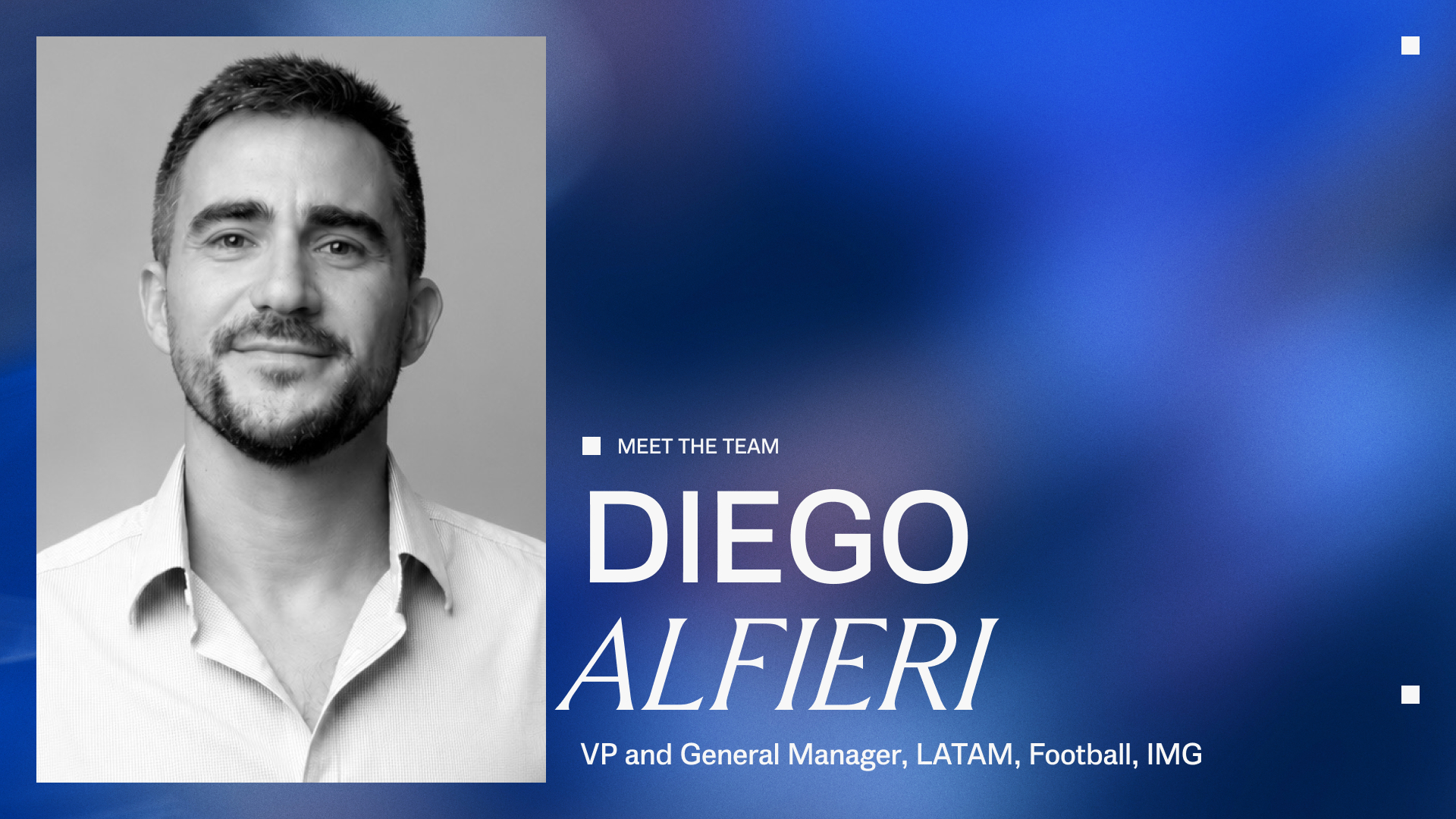
Meet the Team | Diego Alfieri
meet the team
23.09.2026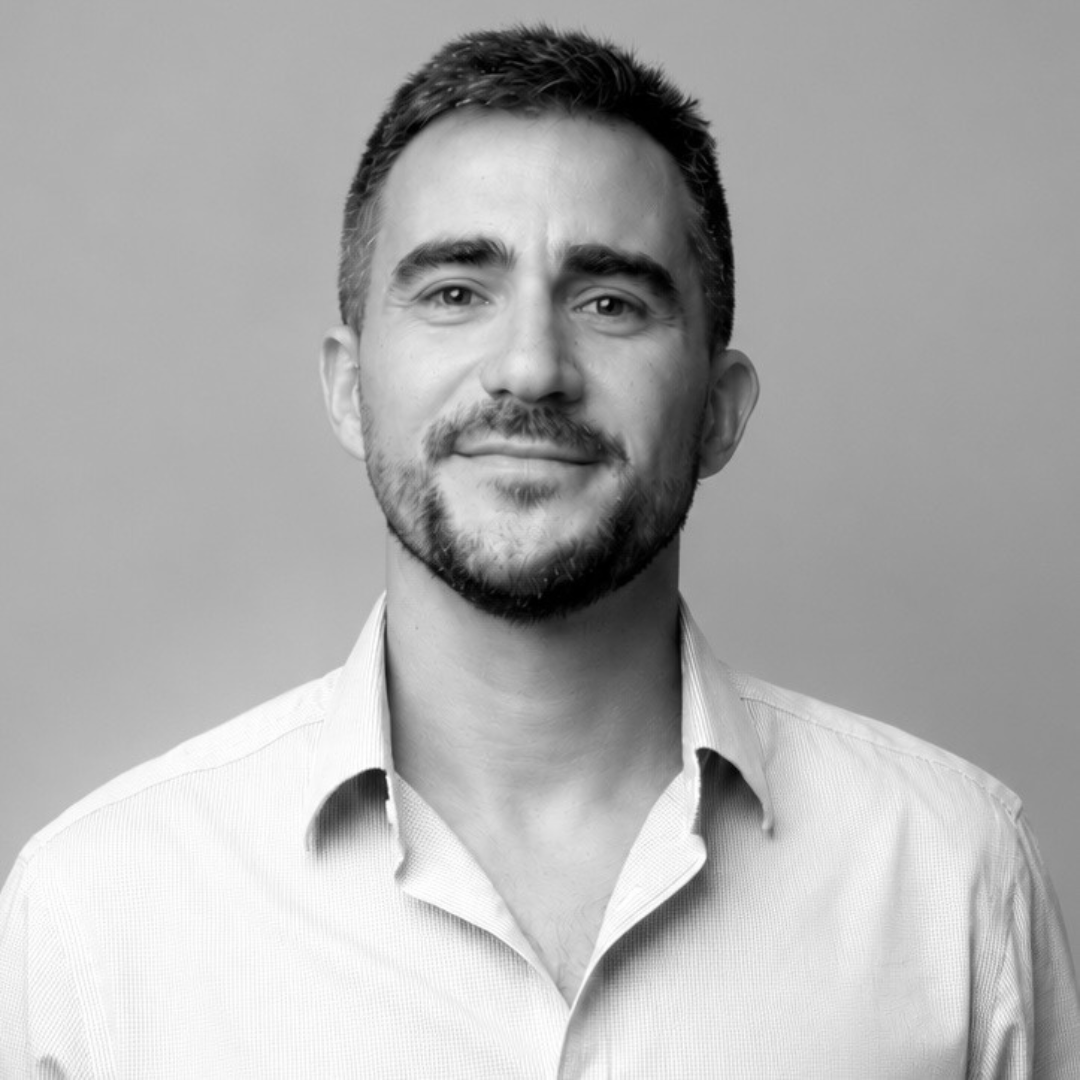
Could you introduce yourself and explain your role at IMG?
I’m Diego Alfieri, VP and General Manager of Football for IMG in Latin America. My background is a bit unusual for this industry, before moving into sport, I worked across technology, financial services and telecommunications, which taught me to look hard at business models and at how industries adapt when the way people consume changes. That perspective shapes how I approach football today. I’ve been working with CONMEBOL and its club competitions since the partnership with IMG was formed in 2018, when I joined FC Diez Media at the very beginning of the project. I’ve had the opportunity to grow alongside the business, eventually becoming General Manager and then leading the transition and integration of FC Diez into IMG. Today, I lead our football operations related to CONMEBOL across the region, working with a fantastic team across Latin America and connecting our local expertise with IMG’s global capabilities. My remit also includes delivering the IMG x CONMEBOL Media Summit 2026 at Iguazú Falls, bringing together CONMEBOL, IMG, broadcasters and rights holders from across South America ahead of the 2027–2030 cycle. The summit is important because it brings these stakeholders into the same conversation about the future of the media product, distribution and how the competitions can continue to grow for fans, partners and audiences. My focus is on the continued growth of the business and, above all, on making sure we keep evolving the partnership and building something of lasting value alongside CONMEBOL.
What does your role involve as VP and General Manager of Football in the region?
The scope is broad, which is one of the things I enjoy most about it. I have overall responsibility for our CONMEBOL-related football business across the region, which brings together media rights, sponsorship, digital and our commercial and operational delivery. So, in a single week I can move from a rights conversation with a broadcaster to a partnership renewal, a product discussion or an operational review of how we deliver on the ground. A big part of the job is making sure those areas genuinely work as one, because the value we create for CONMEBOL comes from how well they connect, not from how each performs on its own. The other part is looking further ahead: understanding where our competitive advantages lie, where the market is moving, and how technology and innovation can create new opportunities. Ultimately, it is about making sure we continue to evolve, grow the business and find new ways to create value in the region.
IMG and CONMEBOL have worked together across media, sponsorship and digital. How has that relationship evolved, and how does this workshop fit into it?
The relationship has evolved significantly since we started working together, but I think the biggest change has been less about services and more about the depth of the partnership. From the beginning, we worked across multiple areas of the business, but over the years we have built a level of trust that increasingly allows IMG to act as a strategic partner to CONMEBOL, bringing our expertise, perspective and global capabilities into conversations about how the competitions and the wider ecosystem can continue to evolve. That trust has been built over time through consistent delivery, transparency and a shared ambition to keep improving the product. Today, we are increasingly able to think together about what comes next, where the opportunities are and how we can create greater value for the competitions, partners and fans. This workshop is a good example of that evolution: bringing CONMEBOL, IMG and broadcasters together not simply to discuss delivery, but to build a shared vision for the next cycle.
What was the thinking behind bringing broadcasters, CONMEBOL and IMG together at Iguazú Falls for this workshop?
This is a project we have wanted to bring to life for a long time. The thinking behind it is that, while competition is a natural and healthy part of the media industry, there is also enormous value in building stronger connections across the ecosystem and identifying areas where we can cooperate around a shared ambition: growing the entire ecosystem around the product. We see this in other industries, from telecommunications to technology, where companies can compete intensely while still collaborating in areas that strengthen the overall ecosystem and create network effects. For us, that means working together to grow audiences, strengthen the visibility and relevance of CONMEBOL’s competitions in an increasingly crowded media landscape, and ultimately create a stronger product for fans. Just as importantly, we want that growth to translate into sustainable value and stronger returns for the broadcasters and partners investing in our competitions. And doing it somewhere like Iguazú, away from the usual environment, changes the quality of those conversations.
What do you want broadcasters and rights holders to better understand about CONMEBOL’s competitions by the end of the workshop?
I would like them to leave with an even deeper understanding of the strength and uniqueness of these competitions, but also of the opportunity ahead. South American football has extraordinary passion, history and cultural relevance, but we cannot take any of that for granted: audiences are changing, consumption habits are evolving and fans have more content competing for their attention than ever before. CONMEBOL has a clear ambition to continue investing in the product and building a strong ecosystem around its competitions, working closely with broadcasters and rights holders to shape the next stage of growth. As we often say at IMG, we like to combine the science and the magic, bringing together data, technology and insight to anticipate where the product and audiences are heading, while preserving the emotion, creativity and storytelling that make football so powerful. Broadcasters are fundamental to that journey, not simply as distribution partners, but as strategic partners in how these competitions are presented, experienced and ultimately grow.
What has been involved behind the scenes in bringing together the program, speakers and participating broadcasters, and where have you relied most on the wider regional team?
There has been a huge amount of work behind the scenes to make sure the program is genuinely relevant to the senior executives attending the workshop. We have relied heavily on leaders from across our different business units to identify topics that complement the media conversation with perspectives from sponsorship, digital, and content and other areas of the business. At the same time, we have had preliminary conversations with broadcasters to understand the issues and opportunities that matter most to them, and we have brought them directly into the program through panels and open discussions. The CONMEBOL team has also played an important role in identifying the key priorities and considerations as we prepare for the next cycle. Ultimately, the program has been built collaboratively, bringing together different perspectives to help make the onboarding into the new cycle as effective as possible and, more importantly, start building that shared vision for how we can grow the competitions together.
When the participants leave Iguazú, what would you like them to take away from the workshop?
I would like them to leave Iguazú feeling the importance they have in the shared vision of these competitions. I hope they leave with a clearer understanding of CONMEBOL’s ambition for the 2027–30 cycle, but also with the sense that their ideas, expertise and experience are an important part of shaping that journey. Just as importantly, I hope we leave with even stronger relationships and more open channels of dialogue, so that Iguazú becomes the starting point for many more conversations and opportunities to work together. Ultimately, the next stage of growth will not come from any one of us individually, but from combining our strengths across CONMEBOL, IMG and our broadcast partners.
Looking ahead to 2030, what would success look like for South American football and its audiences?
By 2030, success for me would mean South American football becoming the most relevant sports content in the region. The challenge is to preserve that passion and authenticity while connecting with new generations, adapting to new ways of consuming sport and expanding our relevance internationally. Success also means building a product that is properly valued by the market and generates sustainable revenues that can be reinvested into talent, infrastructure and the continued development of both men’s and women’s football.
You have worked closely with CONMEBOL and the South American football market for several years. What keeps the work exciting for you?
What continues to excite me is the extraordinary range of positive impacts that football can have across Latin America. There is still so much opportunity to improve the product through technology, new forms of distribution and better ways to engage audiences, but its impact goes far beyond that. Football creates opportunities, inspires new generations and promotes values such as identity, ambition, resilience and the desire to overcome challenges, while also encouraging healthier lifestyles. In a region with so much talent and potential, I believe football can be a genuine driver of progress and development, and contributing to that journey is what continues to make the work so exciting for me.
What is one thing people might not realize about the work that happens behind the delivery and growth of major football competitions in South America?
I think what most people don’t realize is the extraordinary scale and complexity of the ecosystem behind the 90 minutes they see on the pitch. On the sporting side alone, there are players, coaches, medical and performance teams, club staff and families all contributing to helping athletes perform at the highest level, but around that sits an entire industry dedicated to turning the game into a world-class sports and entertainment product, from competition organization, stadium operations and broadcast production to media distribution, digital content, marketing, sponsorship and brand activation. What continues to impress me is not only the number of people involved, but the level of coordination, discipline and attention to detail required across all of these areas, often involving thousands of people across different countries and organizations working toward the same objective and consistently delivering at the highest standard. The fan ultimately sees the match, but behind every major competition there is an enormous human and professional ecosystem.
What is your favorite CONMEBOL competition or football memory?
My favorite CONMEBOL competition is the CONMEBOL Libertadores. Some of my most special football memories are from going to the stadium as a child with my father and my brother to watch our club, Olimpia, compete in the CONMEBOL Libertadores. I remember the entire experience, the anticipation, the atmosphere, the intensity of international competition and, of course, the excitement of seeing Olimpia compete at the highest level and win major titles. But looking back, what makes those memories particularly meaningful is that football gave the three of us a reason to come together, and simply spend time with each other. It created a sense of identity and belonging that has stayed with me ever since. I think that is one of the most powerful things about football: years later, you may remember the matches and the trophies, but you also remember who you hugged and who was sitting next to you.
Which match or stadium in the region should everyone experience at least once?
It is incredibly difficult to choose just one match or stadium, because each of CONMEBOL’s ten countries has iconic clubs and venues that can offer unforgettable experiences. But if I had to choose one, it would be a CONMEBOL Libertadores final at the Maracanã. The history of the stadium, the legendary matches and tournaments it has hosted, and the iconic players who have played there make it one of the great temples of world football, and an extraordinary place to experience South American football at its best.
What advice would you give someone hoping to build a career in sports media?
I would probably give three pieces of advice. First, be ambitious about what you want to achieve. Set yourself meaningful goals and don’t underestimate how far a clear vision, combined with hard work and consistency, can take you. Second, stay relentlessly curious. Sports media is evolving incredibly quickly, so treat your career as a continuous learning process, read, research, ask questions, learn from other industries and stay close to new technologies, ideas and business models. Some of the most valuable ideas often come from connecting things that initially seem unrelated. And finally, execute. Ambition and curiosity only become meaningful when you have the discipline to turn ideas into action, consistently and over time. If you can combine those three things, ambition, curiosity and execution, I think you give yourself a very strong foundation not only to build a rewarding career, but also to make a meaningful contribution to the industry.
Related news